
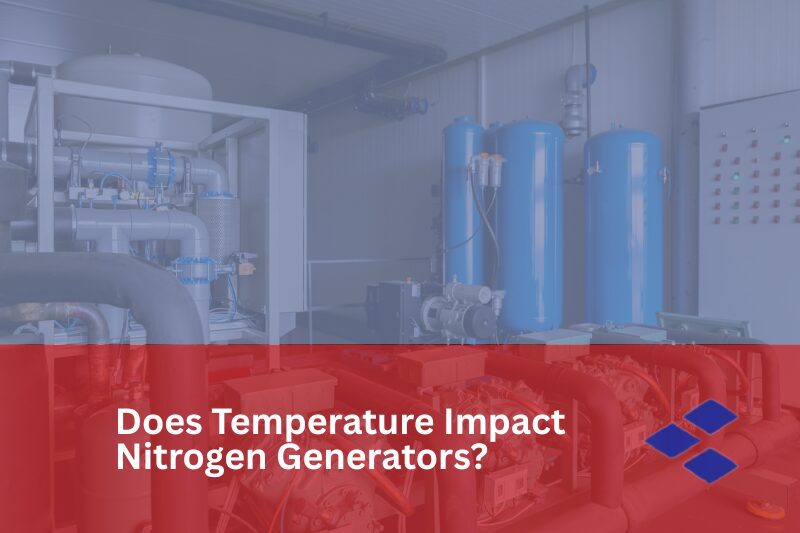
When it comes to industrial systems, environmental conditions play a critical role in performance—and nitrogen generators are no exception. Regardless of whether your facility experiences extreme heat in the summer or bitter cold in the winter, temperature fluctuations can impact how efficiently your nitrogen generator operates and its lifespan. The reality is that understanding these effects can help you maintain consistent gas purity, reduce wear and tear, and prevent costly downtime.
Here at ESA, we’ve helped countless facilities optimize and protect their nitrogen generation systems across various environments. Here’s what you need to know about how temperature impacts your equipment—and how proactive maintenance can help.
How Nitrogen Generators Work
Before diving into the effects of temperature, it’s helpful to understand the basics. Industrial nitrogen generators produce high-purity nitrogen gas by separating it from the other components of compressed air—primarily oxygen, carbon dioxide, and water vapor.
Two primary technologies are used:
- Pressure Swing Adsorption (PSA): Uses carbon molecular sieves to absorb oxygen and other gases under pressure, leaving behind nitrogen.
- Membrane Systems: Use semi-permeable fibers that allow faster gases (like oxygen) to pass through more easily than nitrogen, separating them based on molecular size and diffusivity.
Both systems rely heavily on consistent air temperature, pressure, and quality to achieve optimal nitrogen purity and output.
The Impact of Cold Temperatures
When temperatures go low, nitrogen generators, especially those using compressed air systems, can experience several operational challenges:
- Increased Moisture and Condensation: Cold air holds less moisture, but when compressed, it can release excess water vapor into the system. If the moisture isn’t adequately removed, it can freeze inside valves, filters, or membranes, restricting airflow and reducing nitrogen purity.
- Viscosity Changes in Lubricants: In PSA systems with compressors, low temperatures cause lubricating oils to thicken. This increases friction, slows mechanical performance, and can strain components.
- Sensor and Control Line Issues: Electronic sensors and control valves can react sluggishly or even malfunction in freezing conditions. This may lead to inaccurate readings or premature shutdowns.
- Reduced Efficiency: Overall system efficiency tends to drop in cold environments as air density increases and equipment must work harder to maintain flow and separation pressure.
The Effects of High Temperatures
On the other end of the spectrum, excessive heat can also pose a challenge for nitrogen generators.
- Overheating Components: High ambient temperatures put stress on compressors and molecular sieves, potentially leading to overheating and shortened component life.
- Moisture Control Problems: Warm air carries more water vapor, which increases the burden on dryers and filters. If these components become saturated, nitrogen purity drops.
- Pressure Instability: Hot air expands more readily, which can cause fluctuations in pressure and flow rate, leading to inconsistent gas output.
- Premature Wear and Tear: Continuous exposure to high temperatures accelerates the degradation of seals, membranes, and electrical components.
How to Protect Your Nitrogen Generator
While you can’t control the weather, you can take steps to minimize its impact on your nitrogen generation system. Here are a few best practices to follow year-round:
- Maintain a Stable Indoor Environment: Keep your generator in a temperature-controlled space whenever possible. Most systems perform best between 40°F and 95°F.
- Regularly Inspect Dryers and Filters: Make sure moisture removal systems are working effectively, especially during seasonal transitions when humidity levels fluctuate.
- Check for Proper Ventilation: In warmer months, ensure adequate airflow around the compressor and generator to prevent overheating.
- Use Recommended Lubricants: Always use manufacturer-approved lubricants that can handle both high and low temperatures.
- Schedule Preventive Maintenance: Seasonal inspections help identify small issues before they cause costly damage or downtime.
ESA’s Approach to Reliable Nitrogen Generation
At ESA, we understand that consistent nitrogen purity and reliable performance are critical to your operations. Our technicians are trained to evaluate how temperature and other environmental factors affect your system and provide tailored solutions that keep your equipment running at its best.
No matter if you’re preparing for winter, managing high-heat conditions, or fine-tuning your system for energy efficiency, ESA’s preventive maintenance programs are designed to protect your investment and ensure year-round reliability.
Don’t Let Temperature Take a Toll
Temperature extremes can do more than make your facility uncomfortable; they can compromise performance, quality, and uptime. ESA can help you safeguard your nitrogen generation system with expert service, tailored maintenance plans, and responsive support whenever you need it.
Contact ESA to schedule a maintenance assessment and keep your nitrogen generator running strong in any season. Reach out whenever you’re ready.