
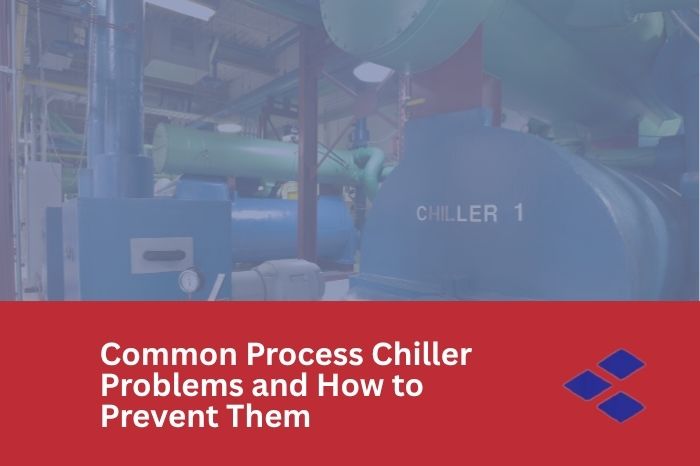
Process chillers usually run quietly in the background, but if they stop working, the impact can be felt quickly.
Process chillers take heat away from equipment, machinery, and production lines where steady temperature control is important. If their performance drops, facilities may see lower efficiency, uneven production, equipment damage, or sudden downtime.
There’s good news, however. At the end of the day, many process chiller problems show warning signs before they fail. If you know what to look for and do regular maintenance, facilities can catch issues early and keep their systems running reliably.
-
Poor Cooling Performance
One of the easiest signs to spot is when the chiller just isn’t cooling as well as it should.
If a process chiller has trouble keeping the right temperature, it could be due to dirty condenser coils, blocked airflow, low refrigerant, not enough water flow, or another mechanical problem. The chiller might keep running, but it will have to work harder to keep up.
Watch for changes in temperature and how the system is running instead of waiting for the chiller to break down. Cleaning coils, checking filters, looking at fluid levels, and keeping an eye on how things are working can help spot problems early.
-
Refrigerant Leaks
A process chiller needs the right amount of refrigerant to remove heat well. If refrigerant leaks out, the chiller won’t cool as well and may have to run longer to keep the right temperature.
Low refrigerant often means there’s a leak that needs a professional to fix. Just adding more refrigerant without finding the leak won’t solve the real problem.
Regular inspections let technicians spot leaks, check refrigerant levels, and make repairs before the system’s performance gets worse.
-
Dirty or Blocked Condenser Coils
Industrial environments are rarely spotless. Dust, dirt, pollen, grease, and other contaminants can collect on condenser coils and interfere with heat transfer.
As more buildup collects, the chiller can’t release heat as easily. This can lead to higher temperatures, more energy use, and extra stress on the system.
Cleaning condenser coils should be a regular part of chiller maintenance. Facilities in dusty or dirty areas might need to check and clean them more often.
-
Restricted or Inadequate Water Flow
Process chillers need steady fluid flow to move heat well. If the flow slows down or stops, cooling won’t work as well.
Clogged strainers, dirty filters, pump problems, closed or improperly positioned valves, and buildup within the system can all interfere with circulation. Changes in flow may also contribute to temperature fluctuations that affect the process the chiller is supporting.
Routine inspection of pumps, filters, strainers, valves, and piping can help keep fluid moving properly through the system.
-
Pump Problems
The pump’s main job is to keep chilled fluid moving where it’s needed. If the pump starts to fail, you might see less flow, uneven cooling, strange noises, leaks, or even a total stop in circulation.
Wear and tear can build up slowly, so regular checks are important. Maintenance teams should look for changes in pressure, vibration, noise, and how well the pump is working.
Catching a pump issue early can prevent a relatively manageable repair from becoming a much larger operational problem.
-
Electrical and Control Issues
Not all chiller problems start with the refrigeration system.
Loose electrical connections, bad sensors, damaged wires, control issues, or other electrical problems can disrupt normal operation. Faulty sensors are especially tricky because the chiller needs accurate readings to run properly.
Pay particular attention to alarms, unexplained shutdowns, and odd temperature readings. You shouldn’t ignore them. A qualified technician can check the controls and electrical parts to see if it’s a small problem or something bigger.
-
Low Fluid Levels or Poor Fluid Quality
The quality of the fluid in a process chiller is important. Low fluid levels can make the system less effective, and dirty or wrong fluid mixtures can cause corrosion, buildup, and poor heat transfer.
Maintenance should include checking fluid levels and condition according to the requirements of the system. Any unexplained loss of fluid should also be investigated, since it may point to a leak elsewhere in the system.
-
Scale and Buildup
Minerals and other debris can build up inside heat exchangers and pipes over time. Even small amounts of scale can make heat transfer less efficient.
This can lead to longer run times, higher energy use, and trouble keeping the right process temperature.
Build-up can be kept in check by managing water quality and with regular system maintenance. At the same time, when scaling is already present, then professional cleaning may be necessary to restore performance.
-
Unusual Noise or Vibration
A process chiller should sound normal on a day-to-day basis. If all of a sudden you hear new rattling, grinding, knocking, or feel extra vibration, don’t ignore it just because the system is still running.
Changes in noise or vibration can mean loose parts, pump problems, worn bearings, compressor issues, or other mechanical trouble. Running the equipment without checking the cause can lead to more damage.
If your equipment starts to sound different, it’s worth finding out the reason.
Preventive Maintenance Can Help You Stay Ahead of Chiller Problems
One of the best ways to prevent a surprise chiller shutdown is to know how your system usually runs.
Preventive maintenance helps set that baseline. Regular inspections let technicians track temperatures, pressures, fluid levels, electrical parts, coils, pumps, and other conditions. Any changes can be checked out before they cause production problems.
A preventive maintenance program may include:
- Inspecting and cleaning condenser coils
- Checking refrigerant levels and looking for leaks
- Inspecting pumps, valves, filters, and strainers
- Checking fluid levels and quality
- Inspecting electrical connections and controls
- Monitoring temperatures and pressures
- Checking for unusual noise or vibration
- Cleaning heat exchangers when needed
- Reviewing system performance for changes over time
Ultimately, how often maintenance is required in your facility depends on the chiller, the environment, the workload, and what the manufacturer recommends. Facilities with heavy production or tough conditions may need more frequent checks.
Don’t Wait for the Chiller to Shut Down
A process chiller doesn’t have to break down completely to cost you money. Gradual drops in efficiency, longer run times, uneven temperatures, and worse performance can all raise costs and wear out the equipment faster.
By watching for these changes, maintenance teams can better control when and how repairs happen. Planned service is much easier to handle than an emergency shutdown during production.
Keep Your Process Chiller Running Reliably With ESA
Engineering Sales Associates can help your industrial facility keep your essential equipment running. Our expert technicians can inspect, troubleshoot, service, and maintain process chillers to spot problems early, boost reliability, ahttps://engineeringsales.com/nd lower the risk of surprise downtime.
If your process chiller isn’t working as it should, or if you want to set up a preventive maintenance plan before issues start, contact ESA today. Our team can check your system and help keep your cooling equipment ready for your operation’s needs.